Hong Kong’s Immigration Department has simplified eligibility and enrollment for the self-service immigration clearance (e-Channel) for qualifying frequent visitors. Visit their website to learn more.

Speak now


I’m Sorry. I didn’t get that.

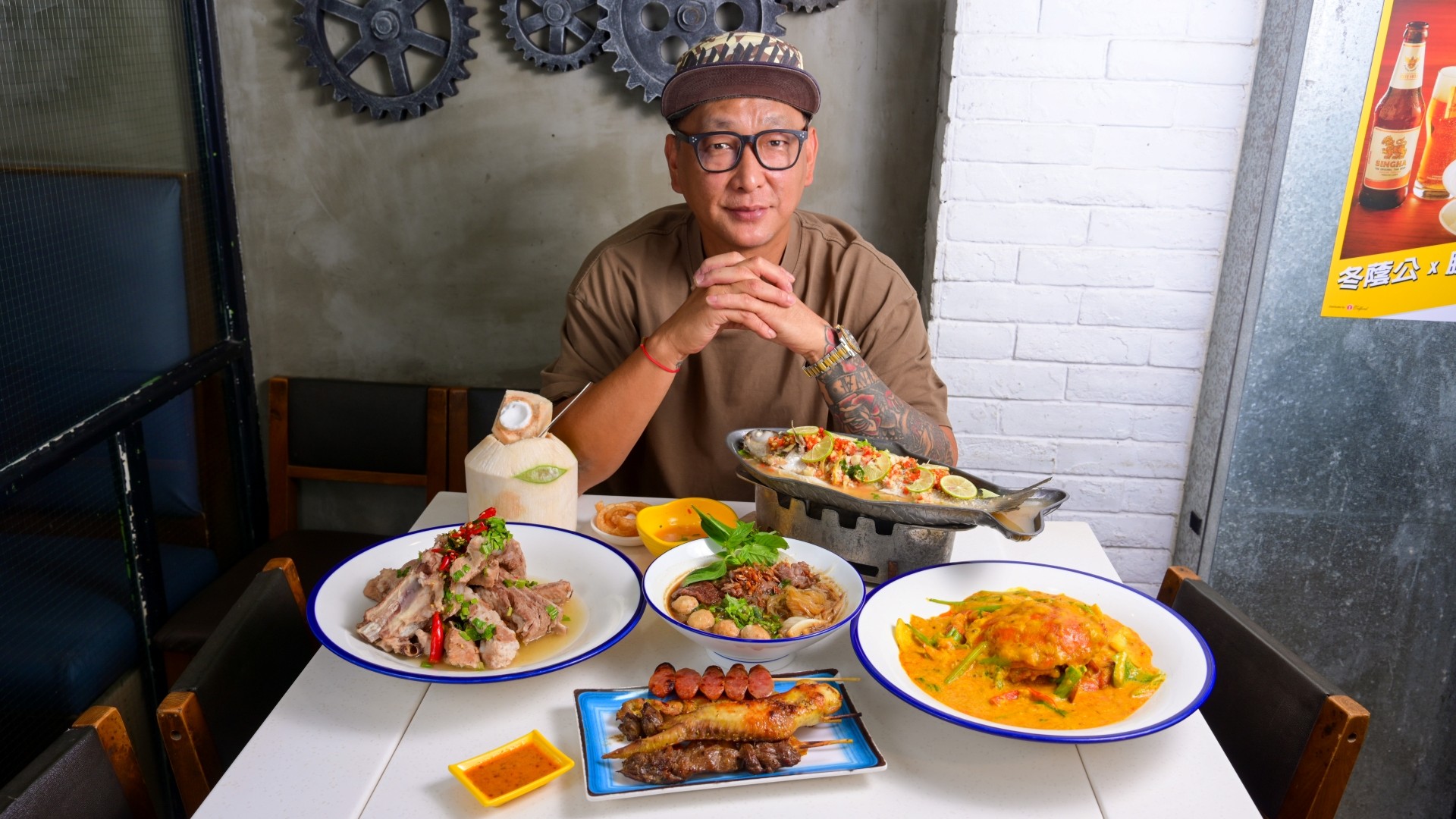
When it comes to savouring authentic Thai cuisine, many locals head straight to Kowloon City, where dishes like curry seafood, tom yum soup, boat noodles and grilled skewers are available in practically any Thai restaurant you see. But who exactly brought Thai culture to Kowloon City and helped it thrive?
Kowloon City has a rich history influenced by migration. Jim, owner of Mini Bangkok Thai Food and a first-generation Thai-Chinese born in the 1970s, recalls “In the 1950s, many Chiu Chow people migrated to Hong Kong and started families. My father was one of them: he formally proposed to my mother with gold in Thailand.” Many Hong Kong men married Thai women and settled in Kowloon City, which later became known as ‘Little Thailand’.
The high concentration of Thai residents in Kowloon City can be attributed to a mix of historical and geographic factors. Early Chiu Chow immigrants settled in this central urban area and brought with them their Thai wives. With Kai Tak Airport nearby, these wives would often travel back to Thailand and return with traditional ingredients like kaffir lime leaves, tamarind and ingredients for tom yum soup. These authentic flavours laid the foundation for private kitchens that eventually evolved into formal Thai restaurants and grocery stores in Kowloon City.
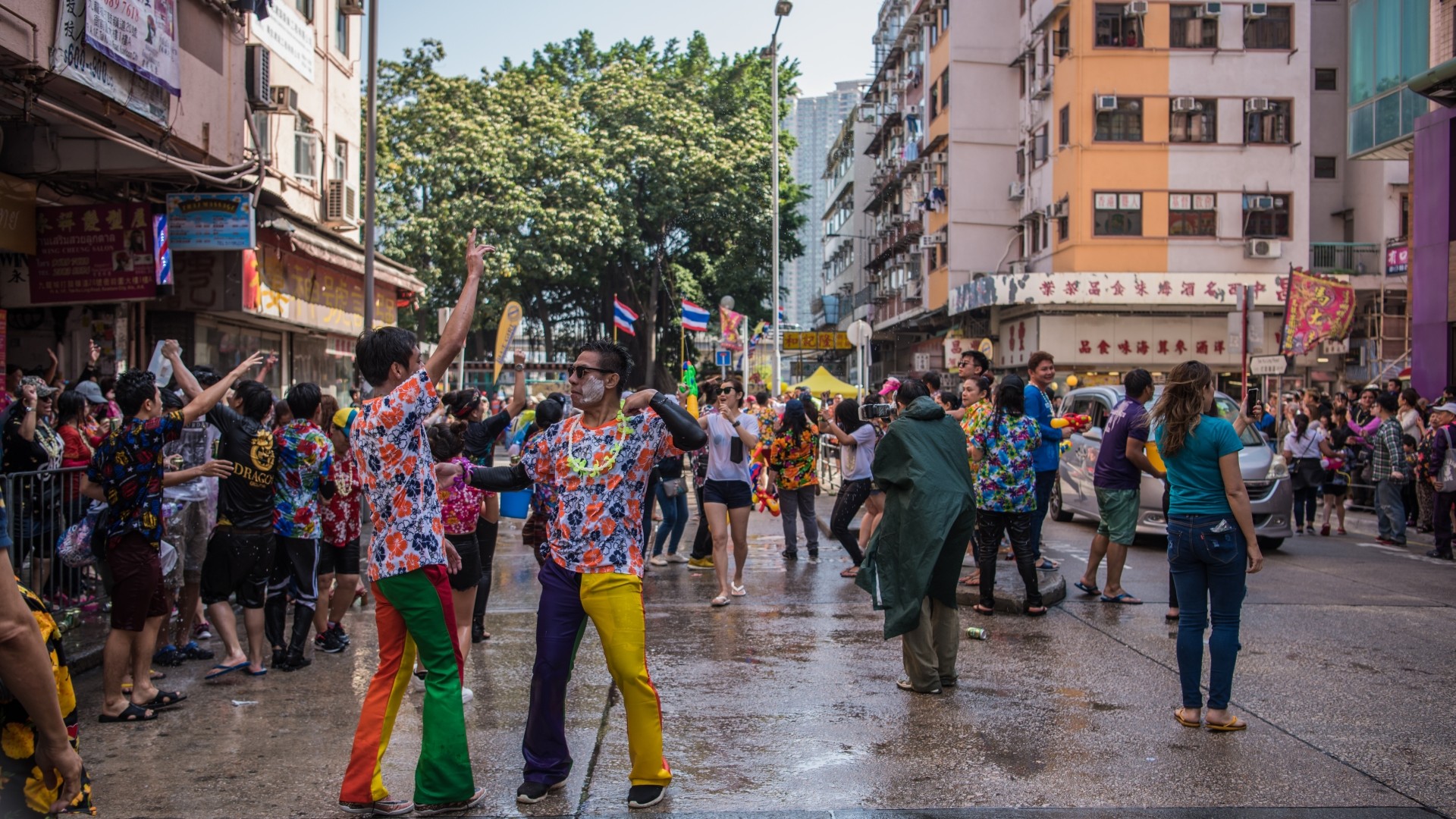
The resourceful Thai-Chinese have built a vibrant community of over 100,000 in Kowloon City, introducing Thai culture to Hong Kong through the annual Songkran (Water Splashing Festival), held since 2002, which symbolises renewal and blessings. “Traditionally, Songkran is celebrated for seven days, but in Hong Kong, we do it for three days around mid-April,” says Jim. Initially held on the streets, this event has gained popularity and is now hosted at Carpenter Road Park.
Hundreds of locals and travellers come together every year to enjoy water splashing, parades in traditional Thai costumes, Muay Thai demonstrations, music and dance performances, alongside a Thai shopping bazaar and relaxing Thai massages. Visitors can also try on traditional Thai outfits (chut thai) and take photos with installations inspired by ancient Thai legends.
As redevelopment in this bustling city is inevitable, younger generations of Thai-Chinese are gradually dispersing to different areas. He remains optimistic about preserving Thai culture, stating “We have trade associations organising events like Songkran annually, which keep the community connected and preserve Thai roots.”
If you’re only familiar with tom yum soup and pad thai, it’s time to expand your palate. Jim recommends several restaurants where foodies can broaden their horizons and discover a wider variety of delicious Thai dishes.
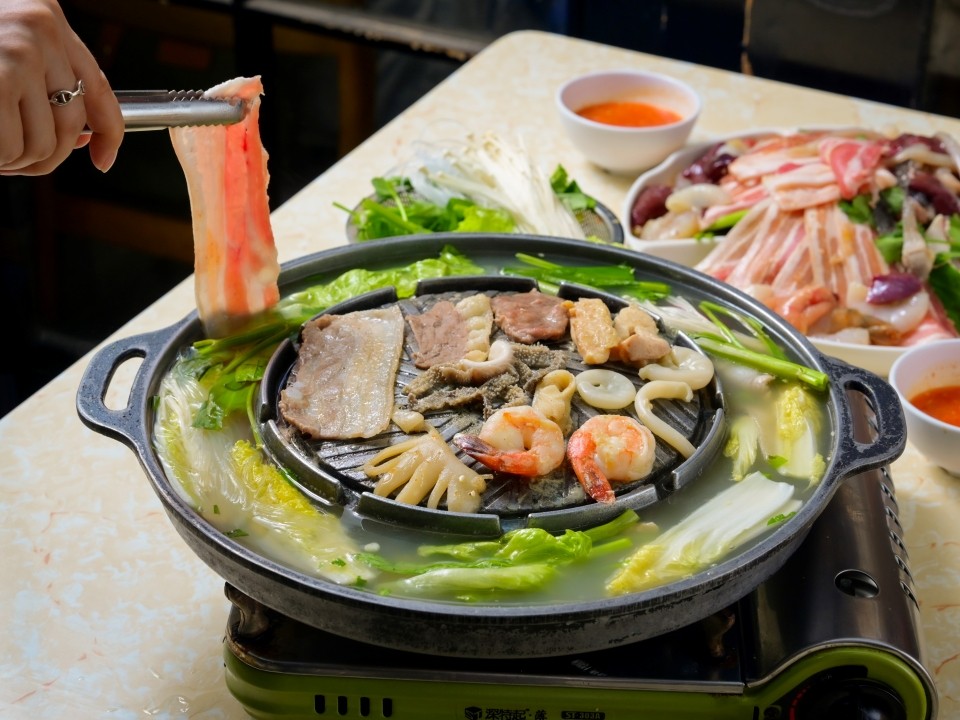
Thai Thung
Their must-try dish is the Thai barbecue and hotpot combo. Grill the meat and seafood in the centre of the hotpot stove, while boiling the vegetables and vermicelli in the outer ring. You can also opt to cook ingredients in the broth for a lighter taste, enjoying different flavours from the same ingredients. Other traditional dishes include roasted pork neck, papaya salad and fried rice in pineapple.
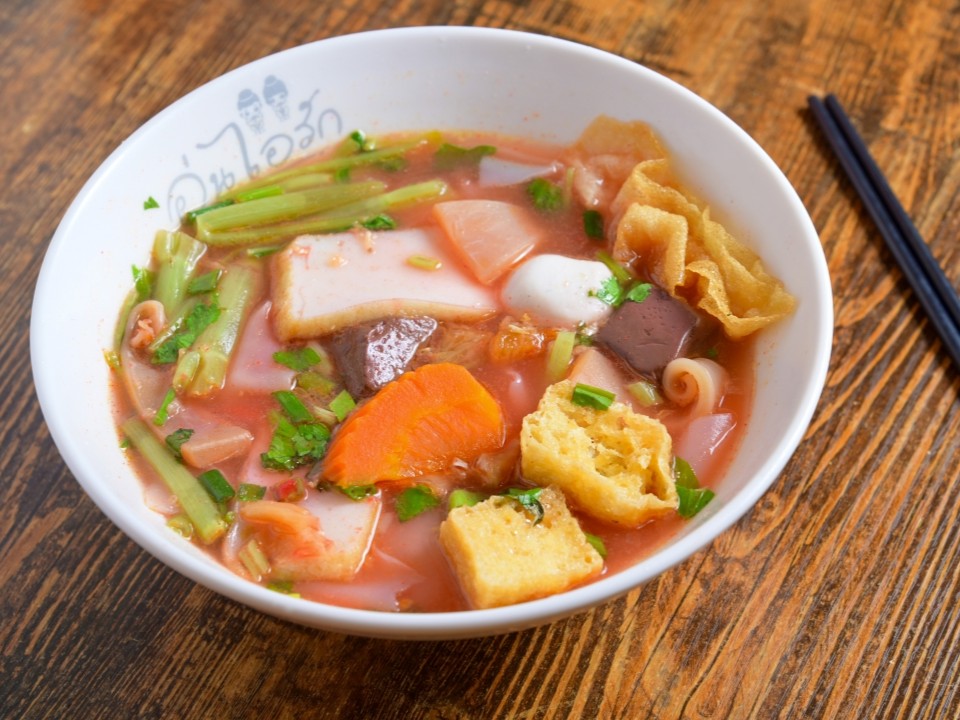
Cheong Fat Thai Food
They are among the few restaurants in Hong Kong that serve yen ta fo, also known as ‘rainbow rice noodle soup’. This Thai pink noodle soup stands out for its sweet, sour and savoury flavours, thanks to the broth made from fermented red bean curd. Each bowl is loaded with pig blood curd, squid, fish fillet, fish balls, fried tofu puffs and crispy fried wontons for a vibrant mix of colours and textures.
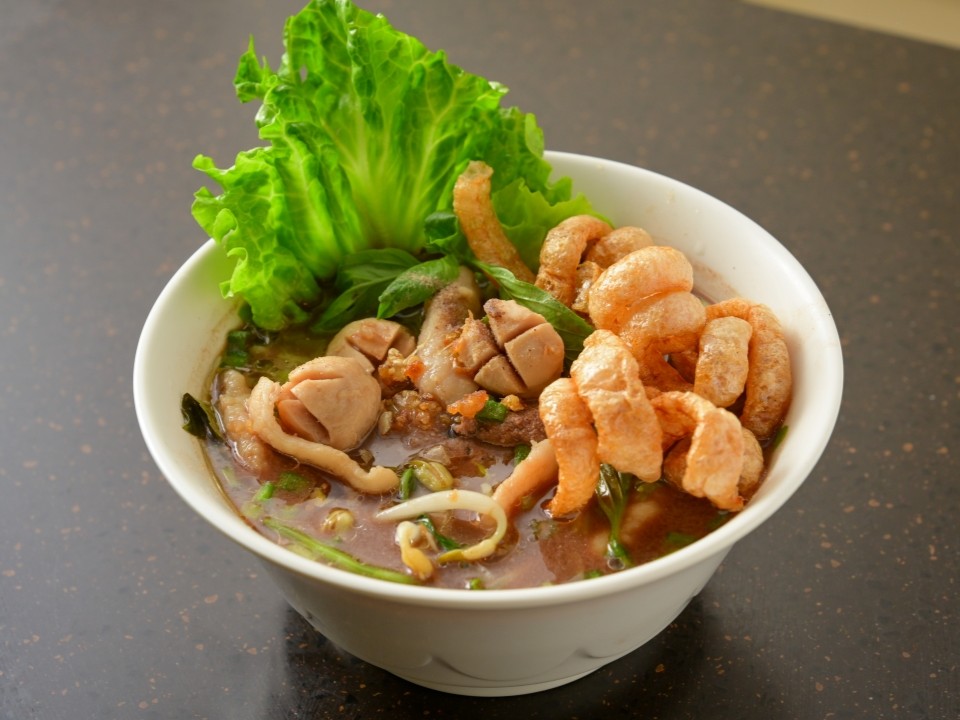
Thai House (South Wall Road)
Their Thai boat noodles are a definite crowd-pleaser. The bowl features a rich, dark broth slowly simmered with pork or beef bones, herbs and a touch of pig blood for an intense umami flavour. Tender slices of meat and crispy pork cracklings nestle on silky rice noodles or bouncy egg noodles. Fresh bean sprouts, zesty lime, fiery chilli flakes and more crispy cracklings add texture and brightness. Fast, satisfying and packed with punchy flavours, this dish is perfect for a quick, satisfying slurp.
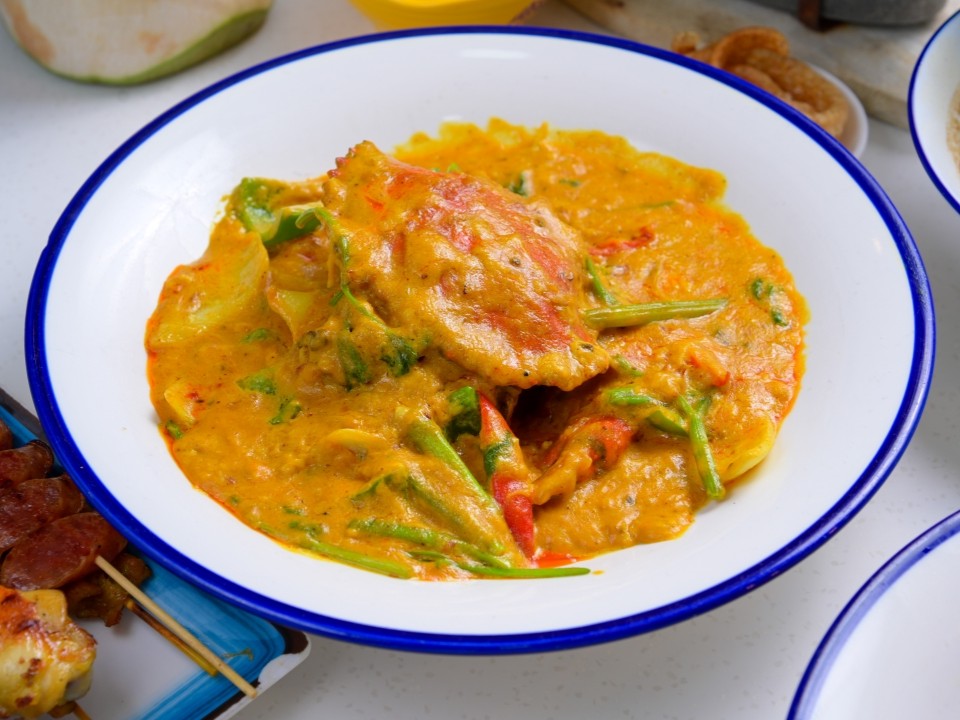
Mini Bangkok Thai Food (Nam Kok Road)
Their fried crab in yellow curry sauce is an irresistible local favourite. Crispy, golden crab is served with a silky, egg-rich curry sauce, which is perfect for dipping with slices of Hong Kong-style garlic bread. For the ultimate indulgence, pair it with a bowl of steamed rice to soak up every drop of the rich sauce.
Information in this article is subject to change without advance notice. Please contact the relevant product or service providers for enquiries.
The Hong Kong Tourism Board disclaims any liability as to the quality or fitness for purpose of third party products and services; and makes no representation or warranty as to the accuracy, adequacy or reliability of any information contained herein.