
Speak now


I’m Sorry. I didn’t get that.
Wong Tai Sin Temple
-
 The Yue Lao Hall is temporarily closed from 17 March 2025 for construction work until further notice.


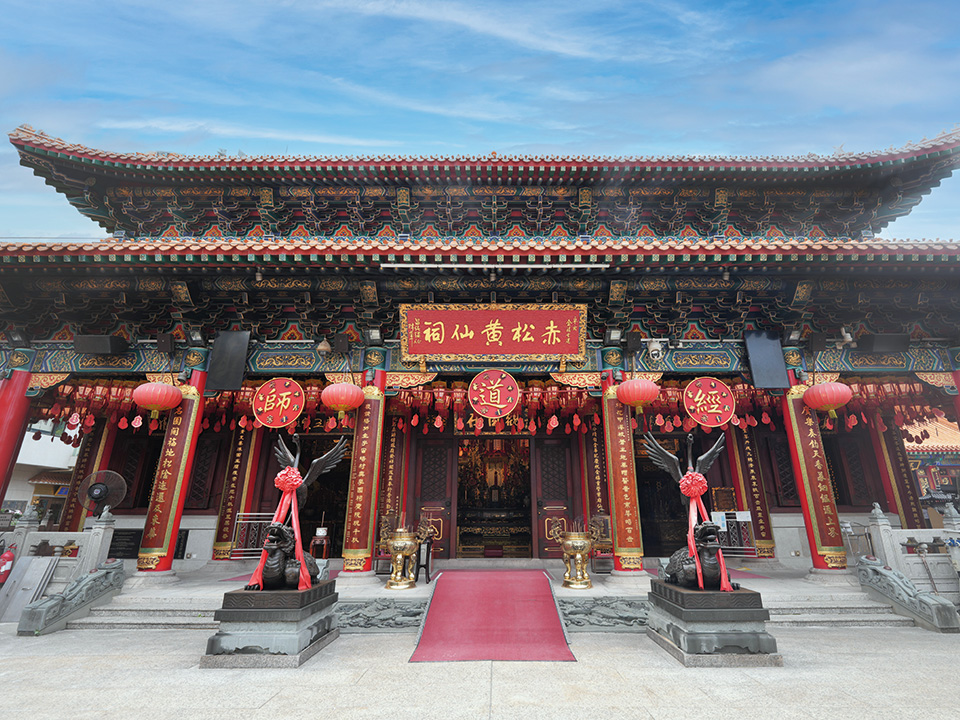
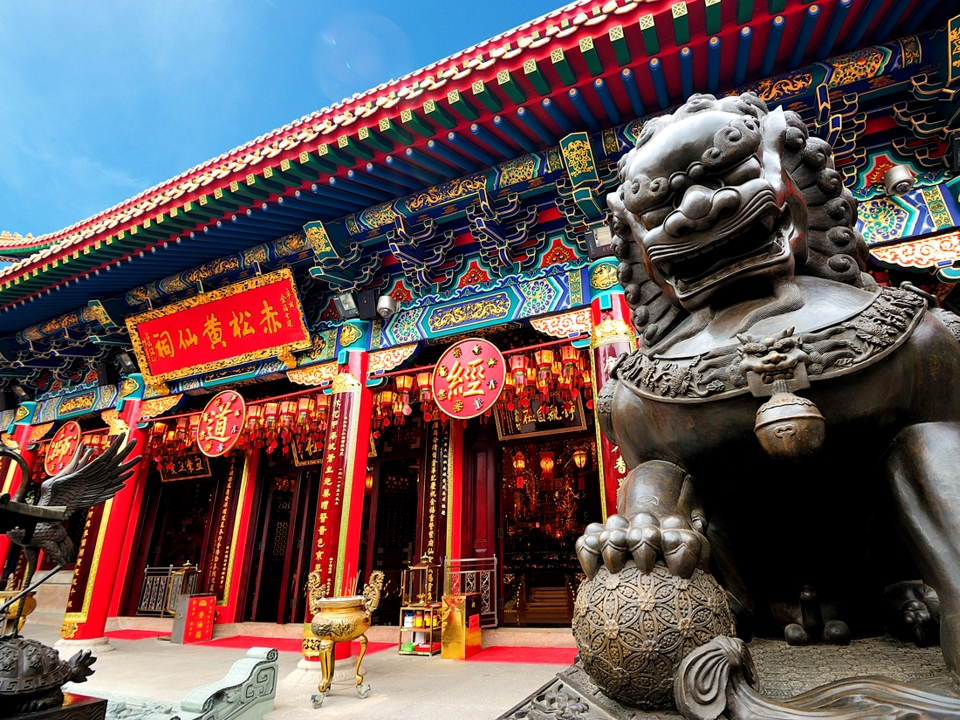
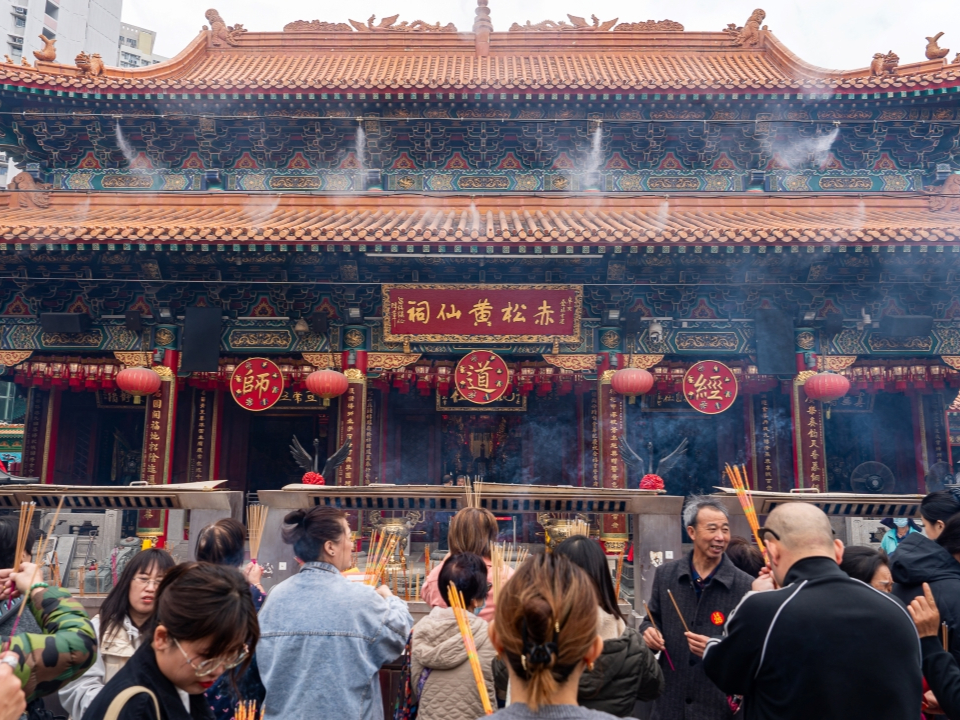
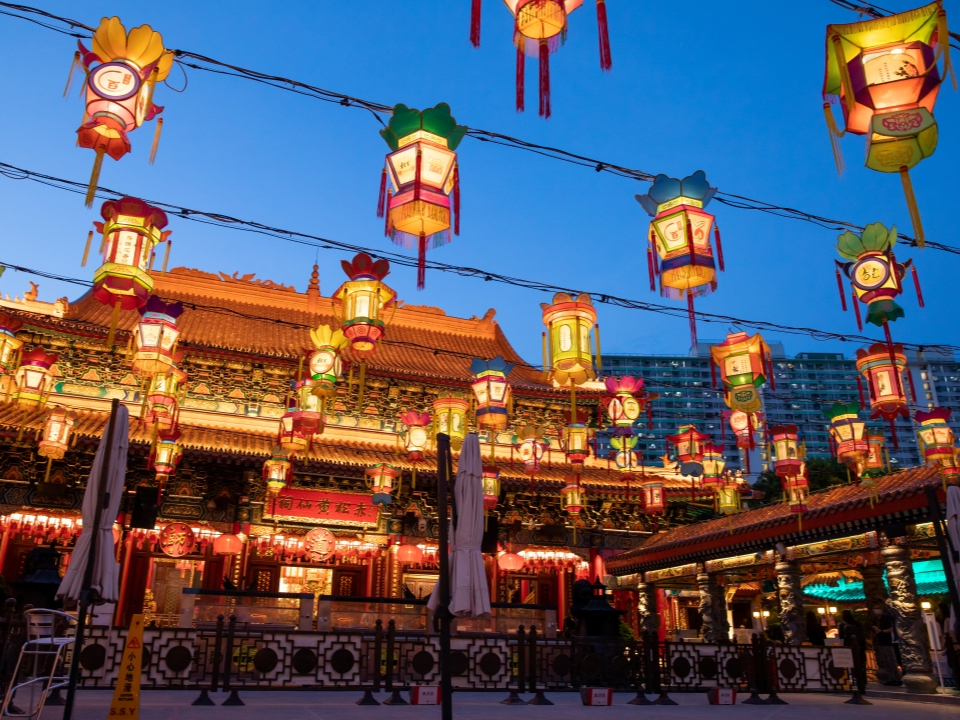
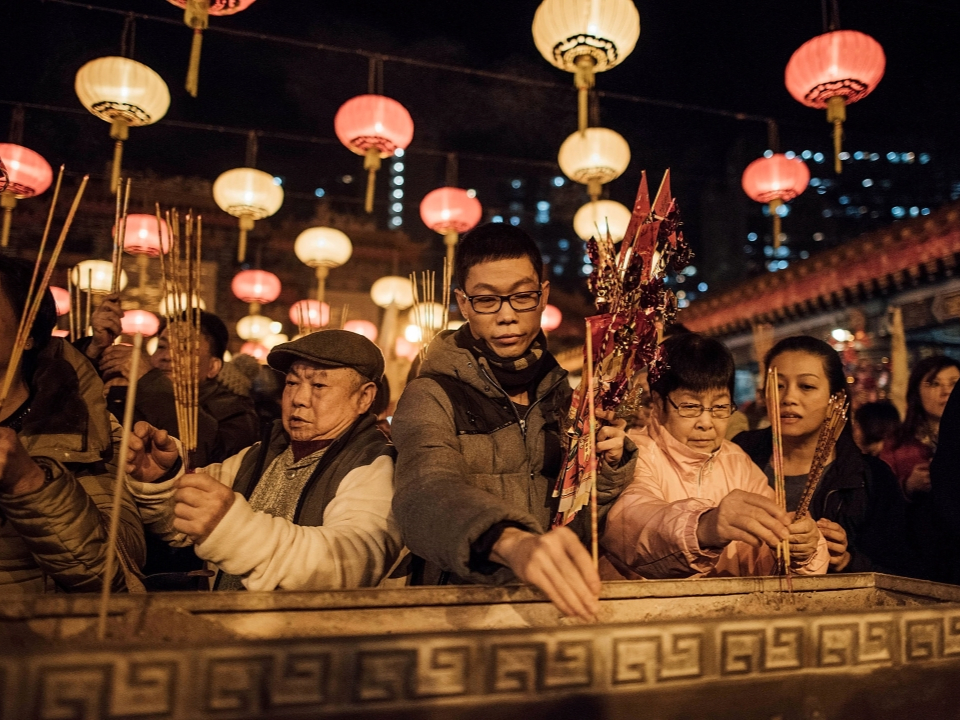
A sacred site rich in history and legend
Wong Tai Sin, the deity to whom the temple is dedicated, is a rather unique figure in Chinese folk religion. Despite being considered a minor god, Wong Tai Sin is reputed to have the power to grant any wish, which has made him immensely popular among worshippers seeking guidance and blessings.
Blending Taoist, Buddhist, and Confucian traditions
The temple itself is a beautiful reflection of the syncretic nature of Chinese spirituality, incorporating elements of Taoism, Buddhism and Confucianism, with intricate shrines dedicated to these three philosophies, each offering a distinct atmosphere and spiritual significance.
Adding to the temple's charm are the giant statues representing the Chinese zodiac, each one a work of art that invites contemplation and respect.
From a small pharmacy shrine to a revered temple
The worship of Wong Tai Sin in Hong Kong began with Leung Yan-am, a pharmacy owner who moved from Guangdong province in the early 20th century. He brought an image of Wong Tai Sin and set up a small shrine in his pharmacy, where customers sought blessings.
Leung claimed Wong Tai Sin instructed him in a dream to build a temple 3,600 paces from the pier in Kowloon, leading him to Chuk Yuen Village at the base of Lion Rock Mountain.
A growing sanctuary for worship and reflection
As Hong Kong’s population swelled in the 1950s, many sought solace and guidance at the Wong Tai Sin Temple. The temple became a central place of worship and has grown significantly over the decades, both in size and in the scope of its influence.
A destination for fortune-telling and spiritual insight
Today, Wong Tai Sin Temple is a bustling hub of spiritual activity. Visitors and devotees flock to its grounds not only to worship but also to have their fortunes read.
Numerous stalls within the temple complex offer interpretations of ‘kau cim’, Chinese fortune sticks, a traditional fortune-telling practice where seekers shake a bamboo cylinder until a stick falls out. It is then interpreted by the stall owners, providing insights and predictions. Additionally, you can find face and palm readers who add another layer of mysticism to the experience.
New Year rituals that highlight enduring devotion
The temple reaches the peak of its vibrancy during Chinese New Year, particularly on New Year’s Eve. Thousands of worshippers line up overnight, eager to be the first to enter the temple and seek blessings for the coming year. This annual ritual underscores the enduring significance of Wong Tai Sin Temple in the hearts of the people.
Information on this page is subject to change without advance notice.